So Long, Farewell: 2015 in Summary
2015 was the year we sent our children to school, after homeschooling.
All of our children have done so well. Zoe entered year six, made herself a wonderful group of friends, was elected house captain mid-year when the previous captain left, was nominated for Writer of the Month, won Aussie of the Month, got a Platinum award for behaviour and a Community Spirit Award at the end of year assembly, presented by our local Federal MP. She joined the debating group as a “fourth speaker”, went to an NRL gala day, a three day camp at Milson Island, visited the V8 Super Cars and was invited to participate in an indigenous sports day. She’s had her struggles but has blossomed into a wonderful young lady who is about to enter high school.
Reuben has had a great time at school with a teacher whose passion for fitness has rubbed off on him. He’s made some friends, won Writer of the Month, gotten a platinum award for behaviour, and represented the school in Newcombe Ball, Cross Country and 200m sprint. He was awarded the Academic Achievement Award for his class at the end of year assembly. He’s been to a two day media workshop at the local high school as well as the same camp as Zoe, V8 Super cars, NRL Gala day and others.
Rhiannon has worked so hard this year and was awarded the Most Improved award for her class at the end of year assembly, most notably for her outstanding effort and improvement in reading where she went from having remedial reading support to completing year two well above the expected level in reading. She’s represented the school in the 100m dash and dancing and received a platinum award for behaviour. She also participated in an after school AusKick (AFL) program.
Josiah has done well in his support class and has been on excursions to the farm and the life education centre as well as participating in a sports day at school and weekly trips to the local shops followed by cooking lessons. He received a silver award for behaviour (different systems in the schools) and an award for active learning in literacy which he received a certificate and medal for.
Ariadne has settled in well to her family day care. She attends two days a week and enjoys the craft and playing with the other kids. She will continue to go next year but is changing days to fit in with some new children who are starting.
And so, as we put our first year of school behind us, it is time to say farewell to this blog. Our eldest is getting to an age where she needs more privacy, and since we are no longer home schooling, there are fewer opportunities for our home learning and even less time to write about them.
I will leave the blog as is, as some may find lists of resources and the like to be useful, however I won’t continue to post.
So long! Farewell!
A New Frontier

Zoe, our eldest, is in year six and will be moving to high school next year. Our local high school is just as close as our local primary school – about 400m walk – and that’s where she will be going.
Zoe and I went to an orientation evening last night and I got a lot of comments about it being scary (but exciting). Honestly, I’m not scared and the orientation evening wiped away any of the concerns I did have. I am confident that we are making a good decision in sending her there. (I don’t say right or best because I don’t think there is necessarily a wrong answer).
No I can’t guarantee she won’t be bullied or that she won’t be exposed to things I would rather protect her from. No I can’t stop peers being a bad influence on her. But, honestly, I’m not worried about these things. They are all likely to happen to some extent and I have the sense that the school will be quite supportive in helping solve problems that will arise. But I know that Zoe is strong and sensible. And I know that God is in control.
I think we are ready for this new frontier and I welcome it.
Yo Soy
Mi llama Liz. Soy un australiano y estoy una estudiante de español.
Tengo trente y cuatro años. Mi esposo es llama Mark. Tengo cinco hijos – tres hijas y dos hijos. Mi hija mejor es Zoe y Zoe tiene doce años. My hijo mejor es Reuben quien es dos años. Siguiente es Rhiannon, una hija tiene siete años. My hijo Josiah tiene seis años; Josiah es autístico. Mi hija menor es Ariadne; ella tiene tres años.
Tengo tres sobrinas – Sarah, Eleanor y Micah.
Esta foto tienes mis hijos y dos sobrinas. 
Homeschool to Public School – About Two-Thirds of a Year

We are nearing the end of term three of the kids being at school and I have been feeling like it’s time for another update.
Ariadne is enjoying family day care and although she sometimes has difficulty with arriving there, within a few minutes she is fine. Shes made some friends and has a good time just spending time with some other people. When she’s at home she loves painting and going for rides on my new bike with a special “Litle Red Seat” that she gets to sit in.

Josiah has really settled into school and is doing really well. It’s taken him until term three to get talktative at school, but he’s enjoying it. He’s achieved a Bronze Award for behaviour and has been able to be regularly intergrated into the mainstream school playground. He enjoys their weekly shopping excursions and cooking, although he often won’t eat what he cooked. Just last week he participated in a Junior Sports carnival at school where I was able to run the 100m race with him.

Rhiannon is really enjoying school also. Recently she was in a dance concert and performed at the Joan Sutherland Performing Arts Centre as part of the Blue Mountains Nepean Dance Festival. She also represented her school at district athletics for the 100m dash. While she continues to struggle with her reading, she is making good progress. She’s achieved both a Bronze and Silver Award for behaviour and recently participated in the ICAS test for Science where she got a High Distinction and was in the top 1% of students in Australia. We are very proud of this achievement!

Reuben is loving school! He has represented his school at the district cross country and district athletics in the 200m run. He’s achieved Bronze, Silver and Gold awards for behaviour, won Writer of the Month for 3-6 and was selected as a finalist from his class in the public speaking competition. He enjoys playing Newcombeball in the local PSSA competition, and is excited that the season is due to recommence. Reuben has a great teacher who is personally into fitness and does a lot of physical activity with her class, which Reuben enjoys.

Zoe has made a wonderful group of friends at school, most of whom will be attending high school with her. She came second at the school athletics carnival in shot put, and is a part of the school debating team as “fourth speaker” helping the other students prepare their arguments and rebuttals. Recently she gave a speech in front of her class as part of the public speaking competition, which was a big achievement for her. She has Bronze, Silver and Gold behaviour awards and has won Aussie of the Month for 3-6, which is a citezenship award. When the female house captain for her sporting house left the school, Zoe was voted in as House Captain. I’ve also had the opportunity to help in Zoe’s class recently with art lessons.

What I’ve realised recently that I’m enjoying about their school experience is that it gives me the opportunity to be proud of my kids! When they score well, when they perform well, when they try their hardest and when their peers select them for roles and awards, it allows me to be proud of my kids. This is something I didn’t really have the opportunity to do when they were at home with me. While I don’t regret home schooling, I’m confident that we made the right choice by sending the kids to school this year.
Sensory play: Ice Cream Dough


This simple dough recipe makes a dough that’s cool to the touch for ice cream play!

All you need is bi carb soda and hair conditioner. I didn’t measure quantities but you just mix until you get a firm consistency that’s not crumbly. You can add scent, colour or sprinkles/glitter as desired.

And playing in the bath makes for easy clean up!
Homeschool to Public School – One Term In
As you would well know, this year brought a lot of changes for our family, with our youngest going to Family Day Care two days a week, and the older four going to/back to school. We have Josiah at one school, in a support class, and the older three at the local public school around the corner.
While anxiety ruled in the weeks leading up to school starting, the transition has been reasonably smooth. All four of my “schoolies” are enjoying school in their own way. Josiah is collected by mini bus in the mornings, which then gives us about ten mins notice before it’s time to leave to walk Zoe, Reuben and Rhiannon to school. Even if the morning is bad, leaving for school gives everyone some time and space to reset, so that a whole day doesn’t become contaminated by the morning’s conflict.
While Zoe and Reuben have been to school before, Rhiannon and Josiah (being in Kindergarten this year) haven’t, however they have all settled into the routine at school. Last time I sent children to school, I think I had unrealistic expectations about what changes it would bring, whereas this time around I feel I had expectations grounded more firmly in reality. I still don’t get as much done in a day as I had hoped but I am learning how much I can realistically expect to achieve in a day.
Zoe has found some nice friends and has settled in well to her class. Her teacher is amazed and impressed by her depth and breadth of knowledge and she is keeping pace with the class, even in the areas where I felt she was weaker. Reuben struggled a little at the start but quickly found his feet and has enjoyed participating in fitness and sport, particularly in playing PSSA (representative) Newcombeball and will be attending the District Cross Country in May. Rhiannon keeps asking to have friends around to play and has joined the Junior Dance group. Her reading, which was my main concern for her, has taken off (first in the holidays and more since she has started school).
Sending the children to school doesn’t change the challenges we face with their physical and mental health as well as behavioural and discipline issues. It does mean, however, that we are not constantly dealing with these behaviours and we all get a break – me from having to police poor behaviour and them from being constantly corrected, and they get a break from each other. I have also realised that a lot of the stress from last year was due to the frequency with which we were in the car. Short car trips are still stressful but they only happen a few times a week now instead of a few times a day.
Ultimately, sending our children to school has not changed our “We Learn 4 Fun” lifestyle. Zoe is still a voracious reader, and Reuben is a keen reader when he finds the right book. Rhiannon is learning to read and will read most of the signs we pass and labels on objects. We still have long discussions with our children – seeing a small fleet of vintage cars turns into a discussion of Historic Vehicles regstrations, trucks blocking roads (by attempting to pass under bridges they are too tall for or up a local steep, windy road with a length limit, to the pressure put on truck drivers to deliver loads in often unreasonable timeframes, but how that does not negate personal responsibility. All in one conversation.
We still learn for fun by going to the Easter show – where we look at exhibits and watch competitions, we don’t go on rides and spend very little time with showbags and other retail outlets. We see movies and go to museums and participate in fun runs together. We go on bushwalks, have people around for dinner and volunteer at parkrun.
I’ve learnt that I quite enjoy helping with homework. I get less battles about the work but we still get to share the learning experience. I’ve found a little time recently to read some of the books that Zoe is interested in and I’m hoping Reuben will lend me his new book he got for his birthday.
I think sending our children to school has been a positive experience for all of us. I don’t regret homeschooling in the past, it was just time to move on. Home educating wasn’t working for us anymore and public school is.
Epic Quest – new blog
I’ve begun a new blog where I will post epic quest updates. Follow me to lizepicquest.wordpress.com for further updates.

Epic Quest 2015 – Week Eighteen

This week was a bit up and down but started, as almost always, with parkrun. I somehow strained my shoulder on Friday and woke up in quite a bit of pain. I wasn’t sure if I was going to be able to manage parkrun but in the end I took Rhiannon with me, and we alternated between walking and short spurts of running, so I ended up with a sprint workout anyway. We did a fair bit of walking though and came in at a much slower than usual, but still respectable time of 44 mins. I also managed to complete one of my two other training runs this week (I missed one due to being sick).

However, mid-week, I got sick and so it wiped out an entire day. And that was after Josiah got sick partway through the previous day so I had a few days that I didn’t have time to do much at all. The enforced rest of being sick did enable me to read The Death Cure by James Dashner, so there was a silver lining. Also, I did manage to just scrape in my 20km this week to end on 323km.
I began my 30 day Push Up challenge a day late (due to start on Saturday) due to my injured shoulder. I’ve progressed from one on-toes pushup to one and a half pushups. It’s only tiny, but it’s progress!
I managed to put some work into my Spanish with four days of Duolingo and two of Rosetta Stone, and also worked on a presentation I am giving for my Spanish class this coming week. While I didn’t get a lot of Rosetta Stone done, it was enough to enable me to complete Level 1!
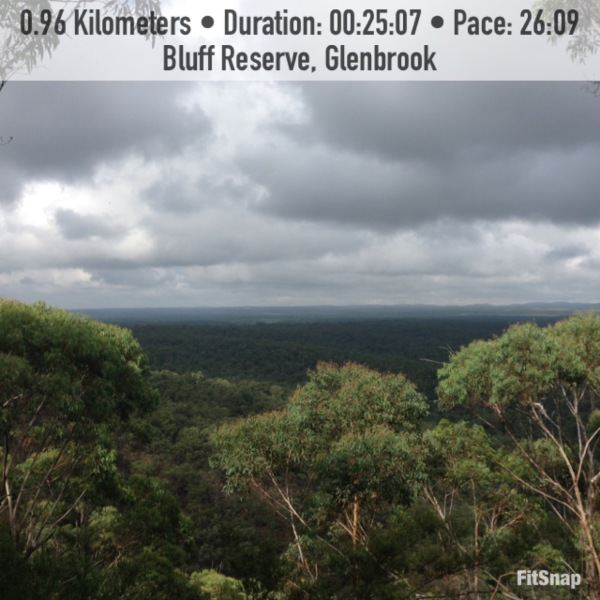
I think that’s all for points for the week. I did explore a new little trail and found some beautiful bushland to practice asanas (yoga), and discovered a new, local park with the kids. After doing my Spartan Race, my mind was ticking over about how the park itself would be a great place to make an obstacle course for the kids!

So, in this week’s points:
parkrun – 10 points
Extra run – 10 points
20km in the week – 10 points
Reading a novel – 20 points
30 Day push up challenge – 6×5 – 30 points
Duolingo – 4×5 – 20 points
Rosetta Stone – 2×5 – 10 points
Completing Rosetta Stone Level One – 20 points
This week’s points – 130 points
Running total – 2650… if I can make 100 points next week I will level up and get a new book!
Epic Quest 2015 – Week Seventeen
This week past has been a pretty epic week.
We started with the simple parkrun, this week as a volunteer at Lawson as the Finish Tokens volunteer. The reason I (yet again) didn’t run parkrun was because I had an event coming up.
On Sunday I competed in the Spartan Stadium Sprint at ANZ Stadium, Homebush. This event was the first of its kind in Australia and you can read my post-race review of it here. While this counts as competing in an event, due to the enormity of the challenge I decided that it would be worth an additional 50 points if I was to complete it with another 50 points being awarded for completing the course in under two hours.

The Spartan Stadium Sprint really was a challenge for me, both physically and mentally but I completed it. With a smile on my face.

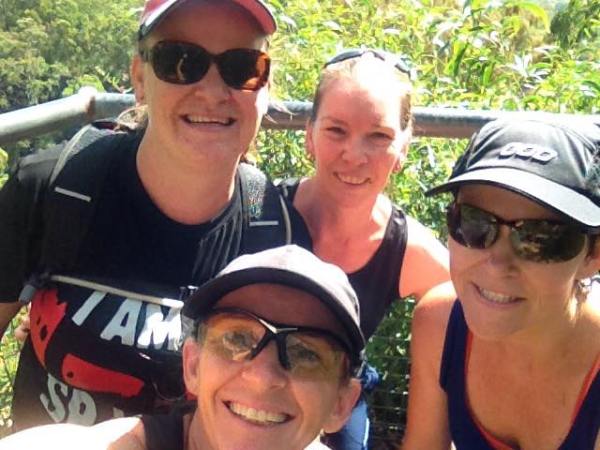
The bulk of the rest of the week was spent recovering from the Spartan Race. I did go on a 5km bushwalk with some Running Mums, did some Spanish study and completed my 30 Day Yoga Challenge, but it was at a much slower “pace” than usual. I’ve added 26km to my 1000km challenge, passing my mini-goal of achieving 300km before my birthday.
Now, last week I promised that now the 30 Day Yoga Challenge was over I would post about a new challenge I was going to set myself. The goal of the 30 Day Yoga Challenge was twofold – to get me into a daily yoga practice but also to get me closer to my goal of holding an arm balance or head stand for a few seconds, and I managed to achieve that goal (see last week). My new 30 Day Challenge will be a push up challenge. One of my physical fitness goals was to be able to do three push ups in a row on my toes. So, every day for the next thirty days I will be doing ten push ups. The idea is that I will start on my toes and do as many pushups as I can manage on my toes, and then do the remainder of the pushups on my knees. Hopefully, as the weeks pass I will be able to do more than one (all I can manage at the moment) on my toes, and maybe even reach my goal of three in a row. I do hope to continue my daily yoga practice also.
Unlike the yoga challenge, I won’t be posting photos (because every day would basically look the same) but in my weekly wrap up I will update on how many days I completed the challenge for and how many pushups I did on my toes each day.
So…. to the points!
So this week’s points are as follows:
Lawson parkrun – 10 points
Spartan Stadium Sprint – 30 + 50 + 50 – 130 points
Completing 20+kms this week – 10 points
Duolingo – 4×5 – 20 points
Rosetta Stone – 3×5 – 15 points
30 Day Yoga Challenge – 7×5 – 35 points
This week’s total: 220 points
Running total: 2520 points
30 Day Yoga Challenge – Week Four


 We Learn 4 Fun